


Stock Video vs Filming vs AI Video

Which Video is Right for Your Business in 2026?
As video continues to dominate digital marketing, businesses are faced with more production choices than ever before. Traditionally, the decision was simple: stock footage or original filming. But in 2026 AI-generated video is fast becoming a powerful third option in this mix.
Each approach has clear advantages and pitfalls, so the decision is nuanced and comes down to what is right for your purpose.
Stock Footage: Fast, cost-efficient but generic
Stock footage (pre-recorded library video licensed for use) remains a popular option for some of our clients at Zoomfilms. It works especially well for businesses looking to produce content quickly and cost-effectively. Ready-made footage from all over the world and at your fingertips, can be an advantage.
The benefits are speed and convenience, immediate access to global footage libraries if needed, lower upfront cost with no need for crews, locations, talent or logistics. Plus, it can be a smart solution for ‘filler’ content to bridge gaps in storytelling.
As recent industry data shows, stock footage continues to grow in popularity as businesses look for cost-effective, scalable ways to produce video content quickly (Technavio, 2024–2025)
The pitfalls of library footage are centred around a lack of authenticity. Viewers increasingly recognise 'stock' as staged or generic, and brand mismatch happens where models and scenarios rarely reflect real operations or intentions. It can come across as overly polished. And there the risk of overuse, when the same clips can appear across competitors’ or even conflicting content. Unless of course a premium is paid for a buy-out. Licensing complexity is also a barrier and usage rights have to be navigated carefully.
In today’s digital landscape where trust is key, these limitations can weaken your brand’s distinctiveness and reduce impact. In some cases, the initial savings in time and budget are offset by content that fails to engage, resonate or convert. That said, stock footage remains a smart choice for background visuals, early-stage campaigns, internal communications, or when speed and scale are the priority over differentiation.
Original Filming: Authentic but requiring higher investment
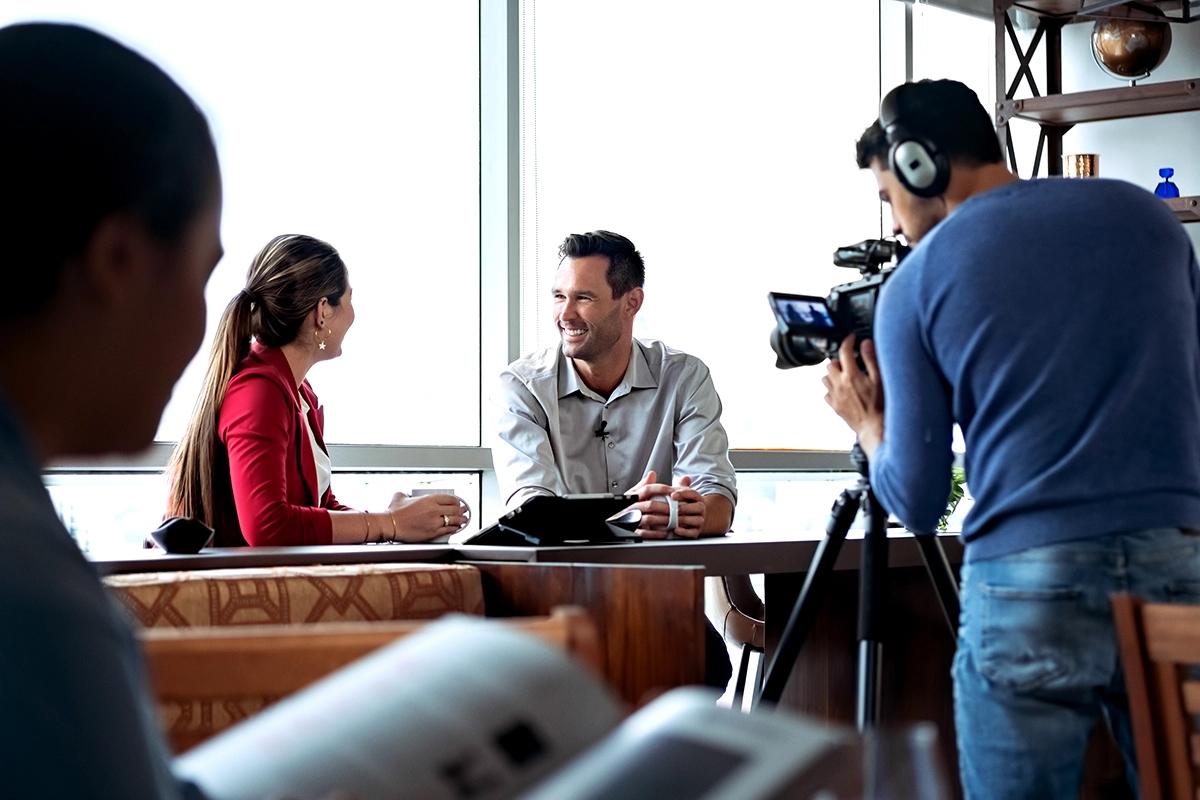
Working with a professional production company to film original content remains the gold standard for brand storytelling.
The benefits are clear. Complete brand control means every shot reflects your values, people and processes, showcasing real teams, real environments and real culture. This in turn facilitates stronger emotional connection and deeper engagement. When your own team, environment, products and customers are featured, the tone-of-voice and company culture naturally come through, building trust and credibility .
Original filming does require more resources (crew, equipment, planning, talent, location set-ups and editing), more time across the process and logistical complexity. That said, for many UK businesses, particularly those in the retail space, in recruitment, professional services, brand positioning or stakeholder engagement, an investment in custom video production delivers and guarantees longer-term value.
AI-Generated Video: Scalable, flexible but still maturing
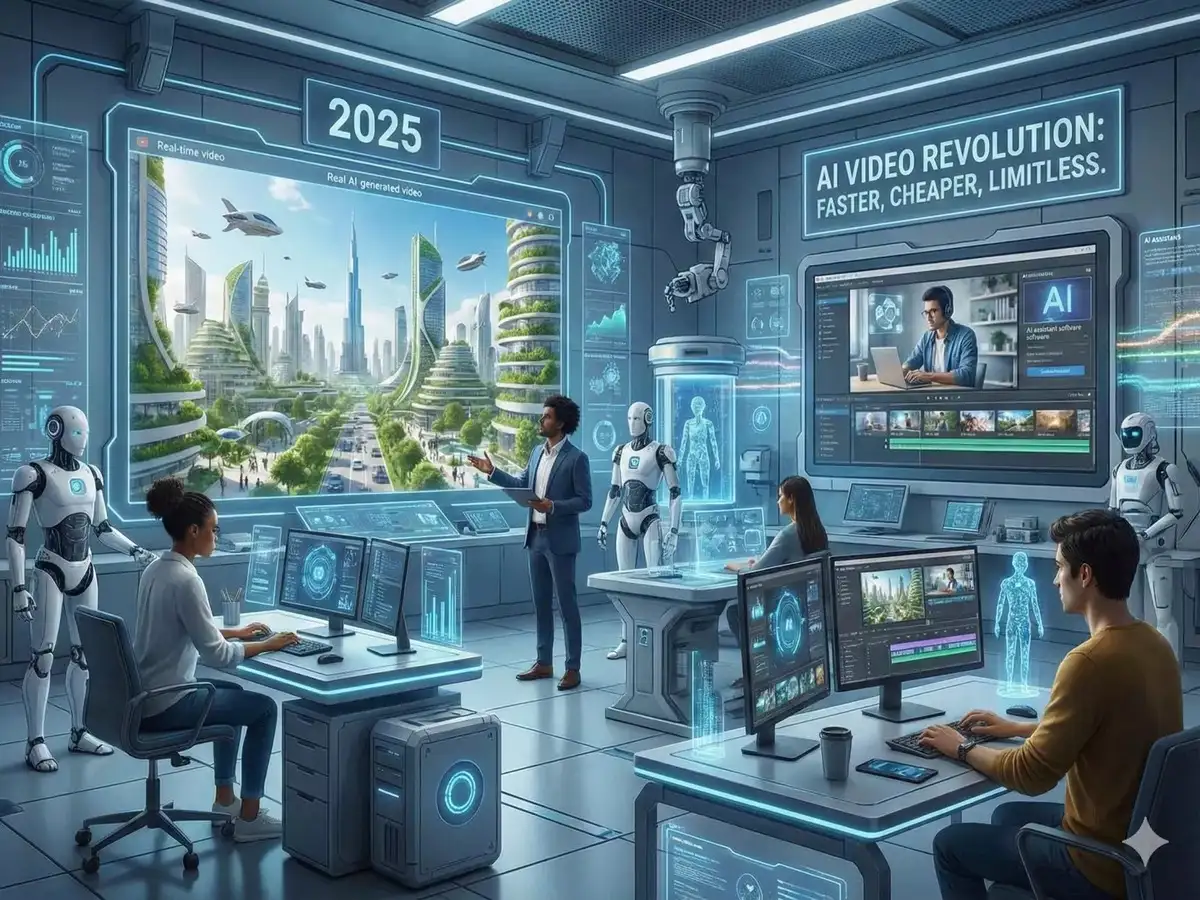
AI video tools have evolved rapidly. Platforms now allow businesses to generate presenters, environments, voice recordings and sound tracks from text prompts and static imagery. According to Gartner, generative AI is expected to play a growing role in marketing content creation, particularly where speed and scale are priorities.
The pitfalls are firmly in the authenticity gap: AI presenters and scenes can still often feel ‘off’. Content that feels impersonal or synthetic poses a great risk to brands, and the ethical and legal considerations are steep when it comes to disclosure, likeness rights, and transparency.
The flipside of the speed and scale coin is creative limitations. AI still struggles with nuance, emotion, and real-world complexity. As noted by Ofcom in its broader work on media trust, audiences are increasingly sensitive to what is real versus artificially generated, making honesty and integrity essential.
So, which method should you choose and what is best for your business or brand? The honest answer: it depends entirely on your objective.
- Library video footage works well for quick turn-around or ‘filler’ content, background visuals and budget-conscious campaigns
- Bespoke filming excels for brand storytelling, product promotion, recruitment, culture and trust-building content
- AI is (at the moment) ideal for elevating existing footage, creating bridging content, bringing your static imagery to life and rapid iteration.
The 2026 reality is that it’s not "either/or". In practice, the most effective video strategies combine two, or even all three approaches. And when working with a professional video production company, businesses have the advantage of getting the best of all worlds.
At Zoomfilms, we’re increasingly helping clients navigate this blended landscape. We don’t see AI, stock video and filming as competing options but as tools to be used strategically. We are experienced in drawing from all three options to achieve the best outcome based on the client’s business objectives, budget and brief.
In2026, video production is no longer a binary choice but a spectrum. And the businesses that succeed will be those that understand when to prioritise speed, when to invest in authenticity, and when to leverage innovation.
Related Articles




zoomfilms
AGENCY

